
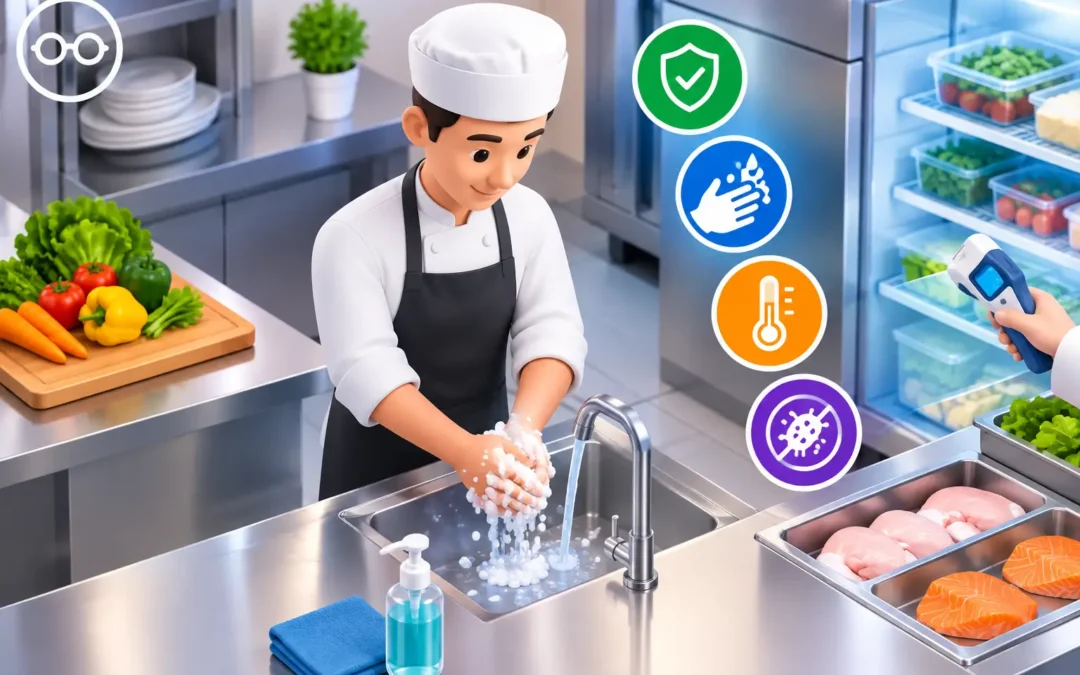
A busy Saturday service is exactly when food safety can slip. Someone is short-staffed, a delivery arrives early, the cool room is packed, and a clean bench becomes the spot for a quick job. Food safety is not about making service slower or filling folders for the sake of it. It is the everyday system that keeps customers well, protects your reputation and gives your team confidence when an auditor walks in.
For cafés, restaurants, caterers, butchers, retailers and event teams, the biggest wins usually come from simple habits done consistently. The trick is making those habits practical enough to survive a real shift.
Food safety starts before the first customer arrives
Safe service begins with how stock enters the business. A supplier can have a great reputation, but your team still needs to check that chilled food is cold, frozen food is properly frozen, packaging is intact and use-by dates make sense for what has been delivered. If raw meat juice is leaking through a carton or a chilled product feels warm, it is not a small issue to park until later.
Give staff permission to stop and question a delivery. That does not mean being difficult with suppliers. It means recording what arrived, raising concerns early and refusing food that may not be safe. Once questionable stock has been put away, mixed with other products or served to customers, the problem becomes much harder to manage.
Storage is where good intentions can unravel. Raw products need to be kept away from ready-to-eat food, ideally below it, so drips cannot contaminate salads, desserts or prepared meals. Containers should be covered, labelled and dated. Cool rooms should be organised so staff can actually find what they need, rather than pulling half the shelf apart during the lunch rush.
Temperature control is a daily discipline
Bacteria do not care how experienced the chef is or how busy the function room gets. They grow when food spends too long at unsafe temperatures. That is why temperature checks are one of the most useful food safety controls in a hospitality business.
A thermometer is only helpful when it is clean, accurate and used properly. Staff need to know which foods require checking, where to take the reading and what action to take if the result is not right. A number written on a sheet without any follow-up is not a control – it is paperwork pretending to be one.
For hot food, keep it properly hot. For cold food, keep it properly cold. Cool cooked food quickly in shallow containers or smaller portions rather than leaving a large pot on the bench to deal with later. Reheat food thoroughly and avoid reheating the same batch again and again. The exact process may vary depending on the food, equipment and food control plan, but the principle stays the same: limit the time food spends in the temperature danger zone.
This is especially relevant for cabinet food, buffets, catered functions and pre-prepared meals. These are not inherently risky ways to serve food, but they demand a clear plan. Who checks temperatures? When? What happens if a display cabinet fails or a function runs an hour late? Teams that agree on those answers before service are far less likely to panic when something goes wrong.
Clean is not the same as sanitised
A bench can look spotless and still carry harmful bacteria. Cleaning removes visible dirt and grease. Sanitising reduces microorganisms to safer levels. Both jobs matter, and doing them in the wrong order can leave a false sense of security.
Start by removing food scraps and grime, then wash using the correct detergent, rinse where required and apply sanitiser at the right concentration and contact time. Wiping a bench with a tired cloth and a splash of whatever is nearby does not count. Nor does spraying sanitiser onto a dirty surface and walking away.
Cloths, chopping boards, slicers, blender seals, can openers, fridge handles and tap levers are easy to miss because they are part of the scenery. They are also touched constantly. Build them into cleaning schedules that suit the way your operation actually works. A tiny takeaway kitchen may need frequent bench and utensil resets during peak periods, while a caterer may need a detailed pack-down process between jobs.
Allergen control deserves the same practical thinking. A customer with a food allergy is relying on your team to give accurate information and prevent cross-contact. That means knowing ingredients, checking labels when products change, using clean equipment and never guessing. If the answer is uncertain, stop and check with the right person. A quick, confident guess is not good service when someone’s health is on the line.
Train the whole team, not just the kitchen
Food safety belongs to everyone who handles food, dishes, packaging or customer questions. Front-of-house staff may be the first people asked about allergens. Delivery drivers may be responsible for holding food at safe temperatures. Managers need to make sure procedures are followed when the roster is thin, not only when a trainer or auditor is watching.
This is where training can make a genuine difference. The most useful sessions connect recognised standards to real workplace moments: a fridge running warm, a staff member returning from illness, a customer asking whether a cake contains nuts, or a tray of chicken being prepared beside salad ingredients.
For many teams, training works best when it is clear, interactive and not overloaded with jargon. Learners should be able to ask questions, practise decisions and understand why a procedure exists. Open-book assessment and different assessment options can also help people show what they know without turning a practical skill into an unnecessary barrier.
Innovative Hospitality delivers recognised food safety training with that real-world focus, including NZQA standards 167, 168 and 2066. It is designed for people who need useful knowledge for the next shift, not just a certificate to file away.
Make safe choices easy during service
The best food safety system is one your team can follow at speed. If labels are confusing, sanitiser bottles are empty, the thermometer has vanished or the handwash station is blocked by stock, people will work around the problem. That is how shortcuts become routine.
Set up the workplace so the safe option is the easy option. Keep labelled containers and clean utensils where they are needed. Make handwashing supplies visible and stocked. Give each person a clear role for opening checks, closing checks and corrective actions. Use short handovers between shifts, especially when there has been a temperature issue, product recall, equipment fault or allergen request.
A few useful conversations can prevent a lot of risk. Ask staff what gets in the way of following the process. They may tell you the cool room shelving makes raw and ready-to-eat food difficult to separate, the delivery docket process is unclear, or no one knows who is meant to calibrate the thermometer. Those are operational fixes, not staff failures.
Be ready for audits without running a panic clean
An audit should reflect how your business operates every day, not trigger a last-minute scramble to relabel containers and find missing records. Auditors are looking for evidence that you understand your risks, follow your food control plan and take action when things do not go to plan.
Keep records simple, legible and relevant. More paperwork is not automatically better. What matters is that checks are completed, issues are documented and corrective action is clear. If a fridge temperature is out of range, the useful record shows what happened to the food, what was done with the fridge and how the issue was prevented from repeating.
Managers set the tone here. When they treat food safety as a shared part of professional service, staff are more likely to speak up. When records are treated as a chore to complete after the fact, warning signs get missed.
Food safety is built in the small moments: washing hands before changing tasks, checking a delivery before it enters the cool room, stopping to confirm an allergen and acting quickly when a temperature is wrong. Get those moments right often enough, and your customers can focus on the meal, while your team can focus on delivering a great service.