
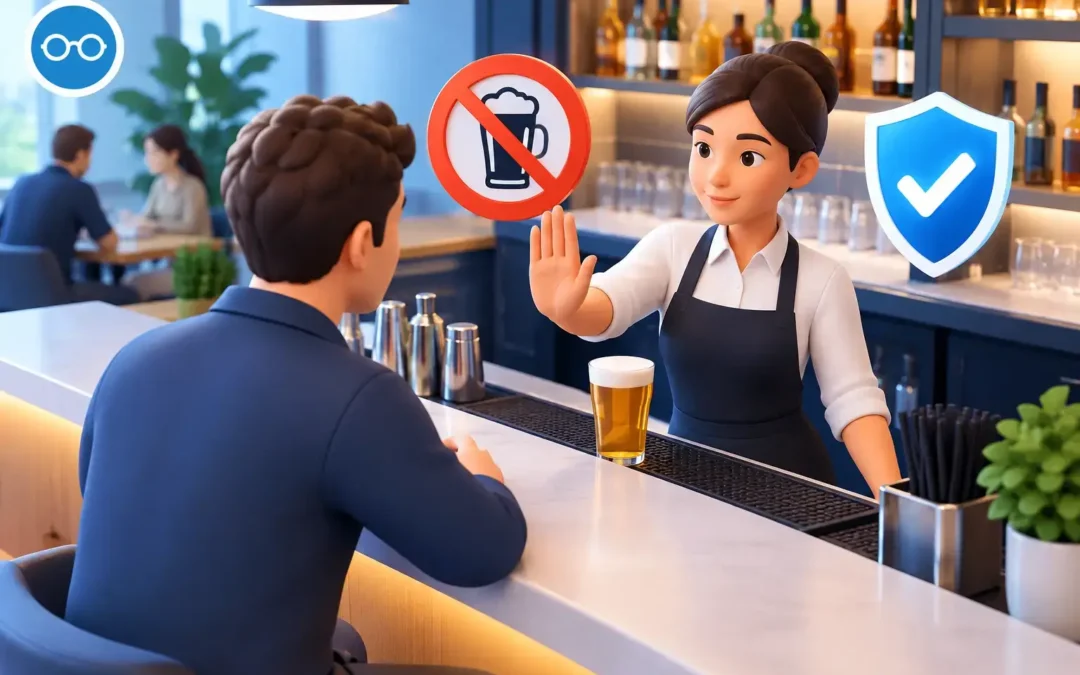
A busy Friday service can change quickly. One moment your team is pouring drinks, clearing plates and keeping customers happy; the next, a guest is showing signs of intoxication, their mate wants “just one more”, and a newer staff member is unsure what to say. The best way to reduce alcohol service risk is not to hope the duty manager catches every issue. It is to give the whole team clear expectations, practical language and the confidence to act early.
For hospitality businesses, responsible service is not about sucking the fun out of a good night. It is about protecting customers, staff, your licence and the reputation you have worked hard to build. Good systems make service calmer, not more complicated.
Reduce alcohol service risk before the first drink is poured
Most alcohol-related problems are easier to prevent than manage at the point of refusal. That starts before doors open, with a team that knows who is on duty, where support sits and what the venue’s standards look like in real life.
A pre-shift briefing does not need to become a lecture. A quick conversation can cover bookings or events likely to be high energy, known large groups, transport options, promotions, security arrangements and who will make the final call if service needs to stop. It also gives staff a chance to raise concerns before they are standing alone at the bar with a difficult customer.
Your house policy should be simple enough for staff to use under pressure. If it lives only in a folder in the office, it will not help during a Saturday rush. Make sure the team understands your expectations around checking ID, monitoring intoxication, supplying food and water, refusing service, arranging safe transport and recording incidents.
Consistency matters. Customers notice when one team member says no but another says yes five minutes later. That mixed message can turn a manageable situation into an argument. A clear escalation process gives staff permission to ask for help without feeling like they have failed.
Train staff to spot the early signs
Intoxication is rarely a switch that flips all at once. Staff need to keep observing customers throughout service, not just when they place an order. Slurred speech, poor coordination, spilling drinks, becoming loud or overly familiar, repeating themselves, aggressive behaviour and difficulty handling money can all be warning signs. One sign on its own may have another explanation, so staff should look at the overall picture.
The challenge is that busy staff can become focused on transactions rather than people. A customer may appear fine at the bar but have been drinking elsewhere in the venue, receiving drinks from friends or arriving already affected by alcohol. This is why communication between floor staff, bar staff, hosts and managers is so useful.
A practical habit is to use names or clear descriptions when flagging concerns: “The guest in the blue shirt near the front windows is starting to stumble. Please do not serve them another drink while I speak with the manager.” That is more helpful than a vague warning across the room.
Training should include scenarios, not just rules. Teams learn faster when they can practise what happens when a regular customer becomes intoxicated, when a friend buys drinks for someone who has been refused, or when a guest becomes upset after being asked for ID. The goal is not to produce perfect speeches. It is to help people stay calm and make safe decisions.
Give staff words they can actually use
Refusing service can feel daunting, especially for new staff. A short, respectful script is often better than a long explanation. Staff can say: “I can’t serve you another alcoholic drink tonight, but I can get you some water or food.” If needed, they can add: “My manager has made the same call. We need to look after everyone’s safety.”
Keep the language neutral. Avoid debating whether someone is drunk, insulting them or blaming a colleague. Do not bargain with “one last drink”, even when the customer promises to leave afterwards. Once service is no longer appropriate, the decision needs to hold.
It also helps to offer an alternative where practical. Water, food, a non-alcoholic drink, a place to wait for a ride or help contacting a friend can lower the temperature and show genuine care. Alternatives do not replace a refusal, but they can make the interaction more manageable.
Build service practices that slow risk down
Responsible service is shaped by the way you run the venue. Promotions, glass sizes, service speed, food availability and staff coverage can all affect how easily risk develops.
Think carefully about offers that encourage rapid or excessive consumption. A deal may look good on a chalkboard, but it can create a bigger operational headache if it encourages people to drink faster than your team can monitor them. The right approach depends on your venue, your customer base and the type of event, but the question is always the same: does this promotion support safe, responsible consumption?
Food and free water should be visible and easy to access. Customers are more likely to take a break from alcohol if there are appealing non-alcoholic choices, decent food options and staff who offer them naturally. This is particularly useful at functions where guests may be drinking over several hours.
Watch for supply to intoxicated people through third parties. A customer who has been refused may ask a friend to buy for them, or a group may take turns ordering drinks. Staff should communicate refusals quickly and clearly so the entire team knows what is happening.
For ticketed events, private functions and busy sporting or entertainment nights, plan your staffing levels properly. Understaffing does not just affect wait times. It reduces observation, makes communication patchy and leaves fewer people available to support difficult conversations. If the event is likely to have a strong drinking culture, put experienced people in key service and supervisory roles.
Keep ID checks calm and consistent
Checking ID is one of the simplest ways to prevent a serious problem, but only if staff are confident enough to do it every time it is needed. Do not rely on a customer looking old enough, being with older friends or saying they are a regular.
Give your team a straightforward process for checking acceptable identification and spotting obvious signs that an ID may not be genuine or may belong to someone else. If there is doubt, pause and get a manager involved. A short delay is far better than an avoidable breach.
The same applies to secondary supply. Adults who purchase alcohol for minors can create risk for the whole business. Staff need to understand when to question a purchase, when to refuse it and who to call for support. Clear procedures protect staff from having to make a high-pressure judgement call alone.
Record incidents so your systems improve
An incident register is not just paperwork for a future inspection. It is a useful record of what happened, how your staff responded and what your business can improve. Record refusals of service, disorderly behaviour, fake or questionable ID, ejections, police attendance, injuries and any significant alcohol-related concern.
The best notes are factual and completed promptly. Include the date, time, location, staff involved, a clear description of behaviour, what action was taken and any follow-up. Avoid emotional language or personal opinions. “Customer was unsteady, spilled two drinks and was refused further alcohol” is more useful than “Customer was a nightmare.”
Review incidents with your team. If similar situations keep appearing at the same time, in the same area or during the same type of promotion, that is a signal to adjust your staffing, layout or service approach. Risk management works best when it becomes part of normal operations, not something discussed only after a complaint.
Make training part of the shift, not a once-only task
Formal training gives people the recognised knowledge they need, including the legal and practical responsibilities tied to alcohol service. But knowledge fades if it is never talked about again. Use team meetings, role-play and quick refreshers to keep responsible service active on the floor.
New employees need a proper induction before they are left to make calls on ID or intoxication. Experienced staff need refreshers too, especially when policies change, a licence condition is updated or the team has seen a difficult incident. Different people learn differently, so training that allows questions, practical stories and accessible assessment can make a real difference.
Innovative Hospitality helps teams build that confidence through practical, supported responsible service and LCQ training. The point is not to make staff nervous about serving alcohol. It is to help them recognise risk early, respond professionally and get home after a good shift knowing they handled things well.