
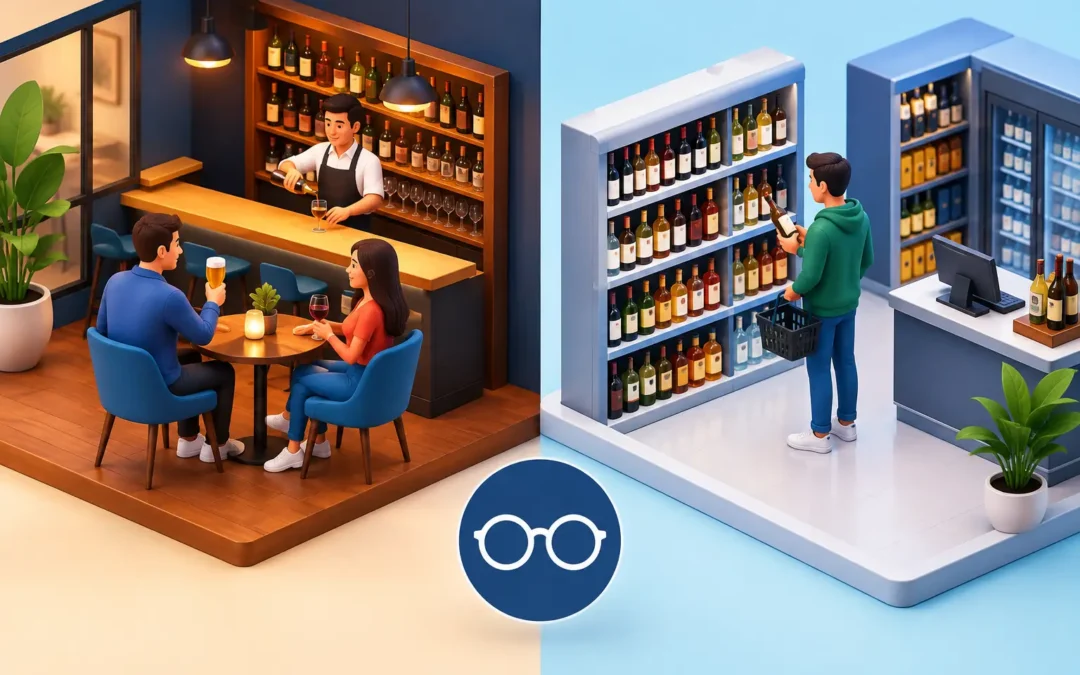
A customer asks for a bottle of wine to take home after dinner. Another wants a beer with their meal. Those two everyday moments sit on opposite sides of a key licensing question: on licence versus off licence. Get it wrong, and a helpful sale can quickly become a compliance issue.
For hospitality operators, retail teams, duty managers and event organisers, knowing the difference is not just licence paperwork. It affects where alcohol can be consumed, how staff serve it, what conditions apply and how confidently your business handles a council inspection, a Police visit or a tricky customer conversation.
On licence versus off licence: the simple difference
An on-licence allows alcohol to be sold or supplied for consumption on the licensed premises. Think of a bar serving pints, a restaurant pouring wine with dinner, or a café offering a beer in its outdoor dining area. The customer drinks the alcohol there, within the area approved by the licence.
An off-licence allows alcohol to be sold for consumption somewhere else. Bottle stores and many grocery retailers are common examples. The customer buys the alcohol, takes it away, and consumes it off the premises.
That sounds straightforward, but the details matter. A licence is not a broad permission slip to sell alcohol however it suits the day. It comes with conditions around the licensed area, trading hours, signage, alcohol types, manager requirements and responsible service. Those conditions are specific to the business and its approved licence.
The best quick test is this: where will the customer consume the alcohol? If it is at your venue, you are looking at on-licence activity. If they will take it elsewhere, it is off-licence activity.
What an on-licence means for your venue
An on-licence is designed for premises where alcohol is part of the customer experience on site. That could be the main event, such as a pub or bar, or a supporting part of the offer, such as a restaurant serving drinks alongside meals.
With an on-licence, the boundaries of your licensed area are a big deal. Your premises might include a dining room, bar, courtyard, footpath dining area or function space, but only if those spaces are included in the licence. Staff need to know exactly where customers may consume alcohol. A table that has moved beyond the approved area, or a drink carried into an unlicensed space, can create an avoidable problem.
Service practices matter just as much. Staff must check identification where needed, refuse service to minors, manage intoxication and ensure alcohol is not supplied to someone who is already intoxicated. Food, water, low-alcohol options and transport information are all practical parts of responsible service, not items to tick off once and forget.
For many on-licensed businesses, the certified manager is central to daily compliance. Your team should know who is managing the premises, how to contact them and when to escalate an issue. That is especially important during busy shifts, private functions and late trading, when good judgement can be tested.
Restaurant, bar or function space?
The type of business shapes how an on-licence operates in practice. A restaurant’s licence may reflect its meal-led operation, while a tavern or bar may have different expectations around its principal purpose and service model. A function venue must think carefully about guest lists, host responsibility, temporary layouts and the handover between event staff.
The lesson is not to guess based on your business name. Read your actual licence and conditions. If your operation changes – perhaps you add a courtyard, start hosting regular ticketed events or shift from café service to evening drinks – check whether your licence still matches the way you trade.
What an off-licence means for retail sales
An off-licence is for takeaway alcohol. The customer buys the product from the licensed premises but does not open and consume it there. The rules around what may be sold, where it can be displayed and when it can be sold are tightly connected to the licence and the wider alcohol laws.
For a bottle store, this distinction is obvious. For other businesses, it can be less clear. A customer may ask to take away an unopened bottle that was displayed for on-premises service. Before agreeing, staff need to know whether the premises has the right authority to make that sale. Good intentions do not change the licence type.
Off-licence teams also need strong responsible-sales habits. Age checks still apply. So does the requirement to refuse a sale where alcohol could be supplied to a minor or where the purchase raises concerns about intoxication or proxy purchasing. The sale may be quick, but staff still need time and confidence to make the right call.
Product placement and promotions deserve care too. Alcohol retail is not a free-for-all, and an eye-catching display can still create risk if it does not meet the rules or licence conditions. If you are unsure, pause and get advice before the display is built, the special is advertised or the product reaches the till.
Common mix-ups that cause trouble
The biggest mistake is assuming that unopened alcohol can always leave an on-licensed premises. It cannot, unless the business has the relevant authority to make an off-premises sale. A restaurant customer taking home a partly used bottle after a meal, for example, may involve rules and conditions that are different from selling a sealed takeaway bottle. Your team needs a clear, venue-specific process rather than a vague “we usually allow it”.
Another common mix-up is treating a licensed area as wherever customers happen to be sitting. A pavement table, shared foyer, car park or pop-up bar space may not be covered just because it is near the venue. The approved plan matters.
Then there is the event question. A wedding, festival, fundraiser or corporate function may need a special licence rather than an on-licence or off-licence. The right option depends on the event, the venue, the alcohol service and whether alcohol is being sold or supplied. Leaving that conversation until the week before the event is how stress becomes expensive.
Choosing the right licence starts with your service model
Before applying for, renewing or varying a licence, get very clear on how alcohol fits into your operation. Are customers drinking at tables, at a bar or in a designated outdoor area? Are you selling sealed products for people to take away? Do you run occasional events in a space that is not normally licensed? Will delivery or online ordering form part of the business?
These questions help identify the licence pathway, but they also expose operational gaps. If your staff cannot explain where alcohol may be consumed, who the manager is or what to do when a customer is intoxicated, the issue is not just the paperwork. It is training, communication and shift-by-shift leadership.
Councils, Police and Medical Officers of Health look at more than a form with the right box ticked. They want to see that the business understands and manages alcohol-related harm. That means your policies need to work during a Friday-night rush, not only when they are sitting neatly in a folder.
Make the distinction easy for your team
The most effective approach is to turn licence conditions into ordinary team knowledge. Include the licensed area in induction. Walk staff through your refusal process. Keep signage visible and accurate. Brief the team before events, especially if the layout, hours or service style is different from usual.
Training should feel practical, not like a punishment. Use real scenarios: a customer wanting to move a drink outside the boundary, a friend buying for someone underage, or a guest becoming increasingly intoxicated at a function. When staff have rehearsed the conversation, they are far more likely to handle it calmly and consistently.
For people working towards a manager’s certificate, the Liquor Controller Qualification builds the knowledge needed to understand licensed premises, responsible service and the manager’s role. Innovative Hospitality keeps that learning grounded in situations hospitality people actually face, with trainer support and assessment options that work for different learners.
A clear licence type gives your operation a solid starting point. A well-trained team is what makes it work when the venue is busy, the questions are awkward and the right decision needs to happen on the spot.